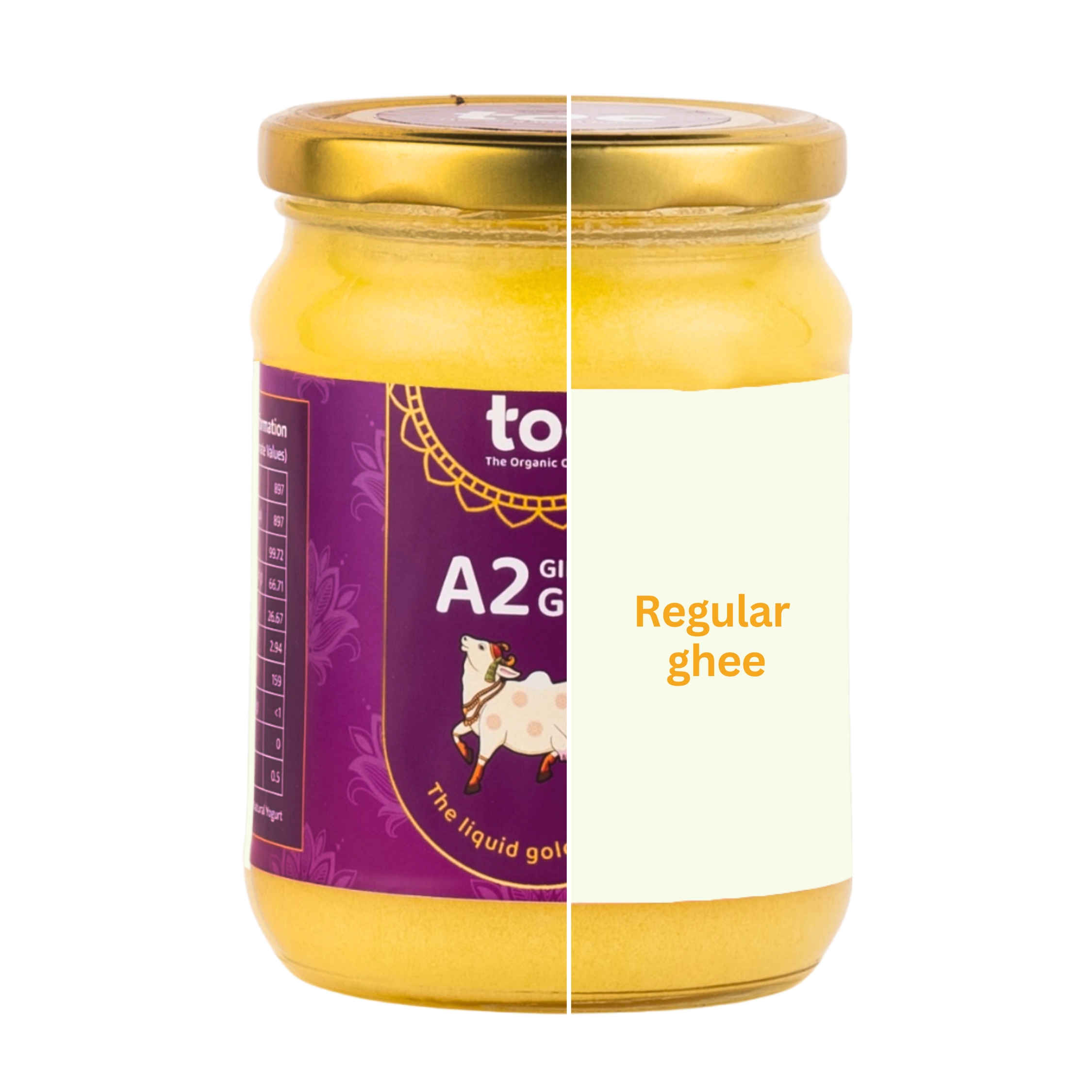
The main difference between A2 ghee and regular ghee can be traced back to
- the milk source and the way the ghee is prepared. A2 ghee is generally made from milk of indigenous, pure-bred cow breeds such as Gir or Sahiwal, whose milk contains the A2 variant of beta-casein.
- In contrast, conventional ghee may be made from milk sourced from Foreign bred, crossbred or non-indigenous cattle, including intensively farmed or confined cows.
- For a premium A2 ghee, the story goes beyond the A2 label, it is about cows that are free-grazed, naturally raised, non-hormone-injected, from trusted farmers, rather than relying on intensive factory-farming practices.
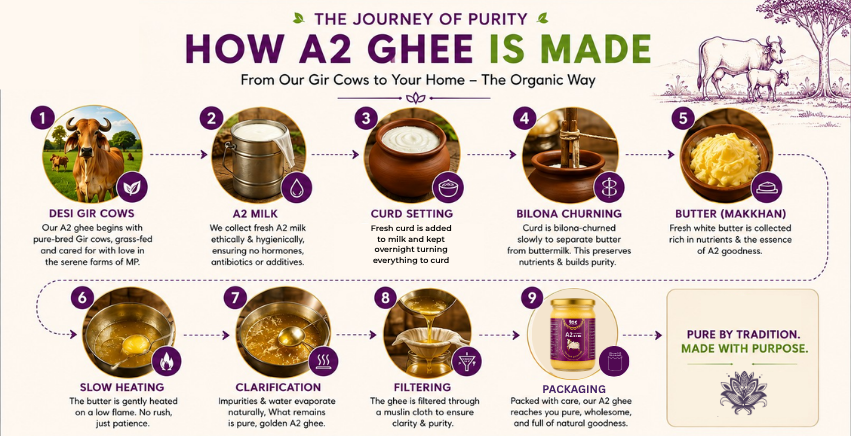
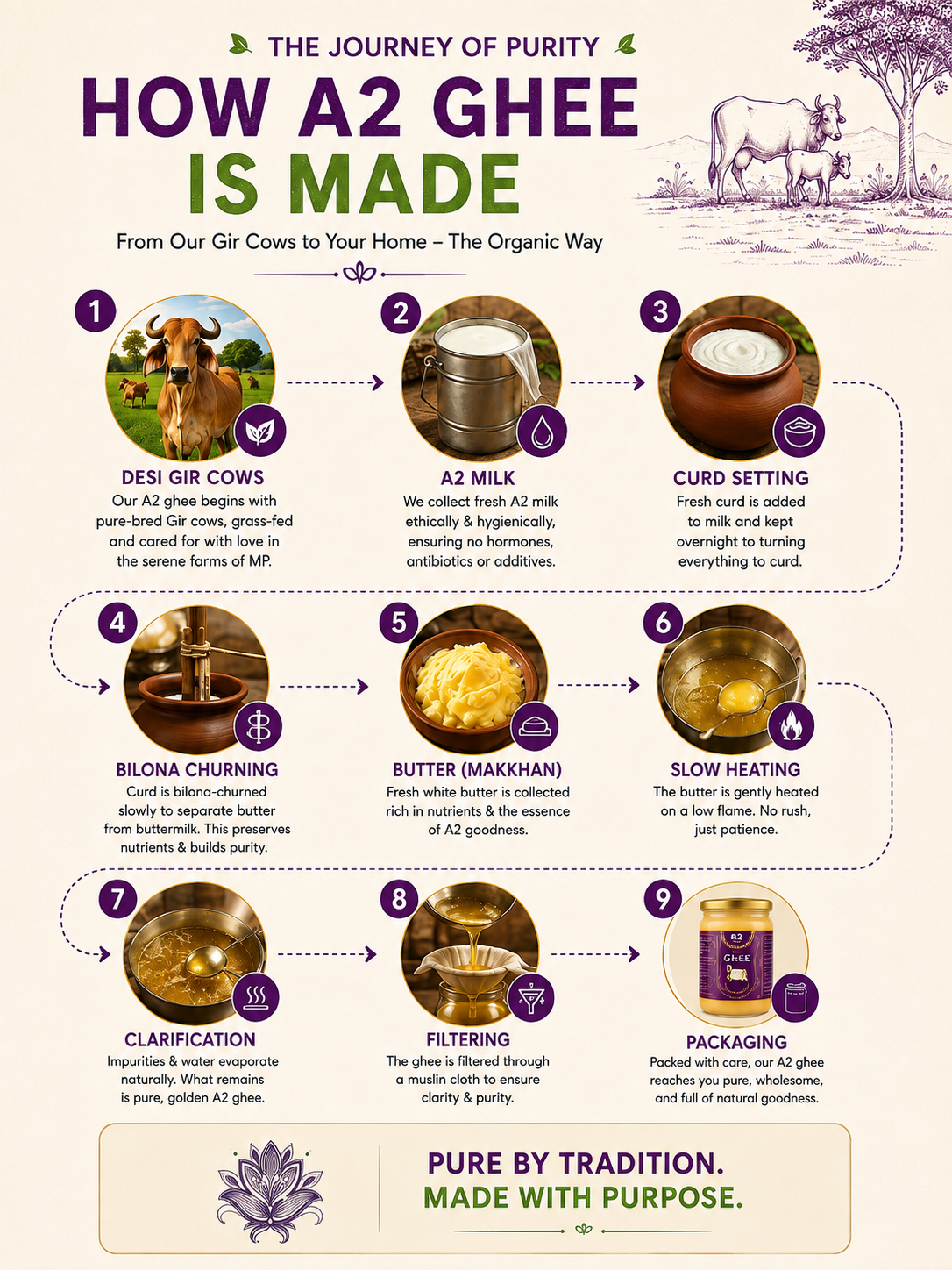
- It is also important to distinguish evidence-based claims from marketing claims. Our A2 ghee is made using the traditional Bilona method, where whole milk is first cultured into curd, churned to separate makhan, and then slowly made into ghee.
- We use approximately 27 litres of whole milk to produce 1 litre of ghee, making the process considerably more labor-intensive. This traditional approach, combined with carefully sourced milk from pure-bred, free-grazing and non-hormone-injected cows, gives the ghee its distinctive aroma, texture, richness, and character.